Sunshine Coast · Market Insight · April 2026
Sunshine Coast Property Investment: Why This Market Remains One of Australia’s Most Compelling Opportunities
Why the Sunshine Coast remains one of Australia’s strongest property markets in 2026: population, infrastructure, supply and current new stock prices.
In this article
- Sunshine Coast: A Compelling Property Investment Market
- The Sunshine Coast Is Not a Single Market — and that Distinction Matters
- The Population Story: Australia’s #1 Internal Migration Destination
- What Population Growth Has Done to Property Prices
- The Rental Market: Back to Critical Territory
- Supply Has Fallen Off a Cliff
- The Future Demand Picture: 546,000 People by 2046
- Can the Market Actually Build Enough Homes?
- The 2032 Brisbane Olympics: A Catalyst — Not Just a Headline
- The New Planning Scheme: Why Zoning Will Define the Next Wave of Winners
- A Framework for Smart Investment Decision-Making
- The Bottom Line
- Want Help Navigating the Sunshine Coast Market?
Sunshine Coast: A Compelling Property Investment Market
By Stephen Lazar | properT network
When most people think of the Sunshine Coast, they picture sun-drenched beaches, laid-back cafes, and a relaxed Queensland lifestyle. And while that image isn’t wrong, it tells only a fraction of the story — and it’s costing some investors a very expensive opportunity.
Because right now, the Sunshine Coast isn’t just a beautiful place to live. It’s one of Australia’s most data-backed, fundamentals-driven property investment markets. And the window to get in ahead of the curve is narrowing fast.
Here’s what the numbers actually say.
The Sunshine Coast Is Not a Single Market — and that Distinction Matters
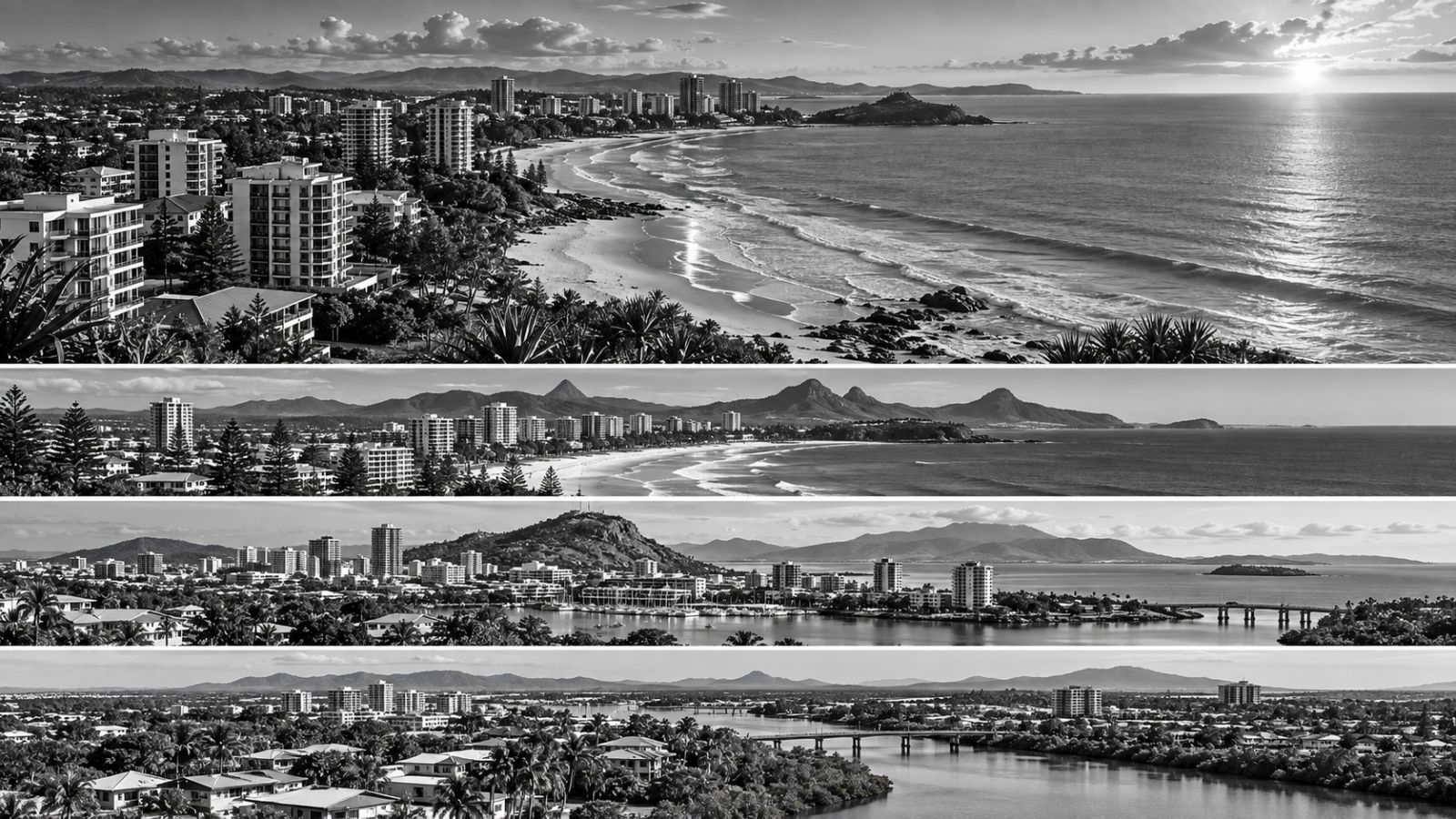
Before diving into the data, there’s something most buyers’ agents gloss over: the Sunshine Coast spans over 100 suburbs across nearly 2,300 square kilometres. It is one of 12 Local Government Areas making up South East Queensland — and it is anything but a uniform market.
There are four distinct submarkets every investor needs to understand:
- The Coastal Lifestyle Strip — From Caloundra, Mooloolaba, and Alexandra Headland through to Coolum. High lifestyle demand, severely limited land supply, and premium price tags. Scarcity is the dominant story here.
- The Middle Ring — The area between the coast and the Bruce Highway. Strong family demand driven by schools, sports facilities, and shopping hubs.
- Major Growth Fronts — Key development zones like Peregian Springs and Caloundra South (Aura) — Australia’s largest masterplanned community. Large-scale residential and infrastructure projects are actively shaping the future here.
- The Hinterland and Rail Spine Towns — Nambour, Palmwoods, Beerwah, and Landsborough. Larger blocks, affordability spillover, and tighter development constraints that create natural scarcity.
Each zone carries its own supply mechanics, demand drivers, and risk profile. Treating them as one market is one of the most expensive mistakes an investor can make.
The Population Story: Australia’s #1 Internal Migration Destination
In June 2021, the region’s population sat at approximately 346,000. By 2026, council-aligned projections place it at nearly 393,000 residents — an increase of roughly 46,000 people in just five years.
But raw numbers aren’t the real story. The real story is velocity and concentration.
Multiple quarters of the Regional Movers Index — jointly released by the Regional Australia Institute and Commonwealth Bank — ranked the Sunshine Coast as Australia’s number one destination for net internal migration. Not top five. Number one.
In the year to December 2024, the Sunshine Coast held approximately a 10% share of all net internal migration to regions across the entire country. It retained that number one position in subsequent reporting windows, including the year to September 2025, where it led the nation for net capital-to-regional inflows.
This isn’t hype. This is measurable, verified, hard data — and it has direct consequences for property.
What Population Growth Has Done to Property Prices
The demand flowing into the Sunshine Coast hasn’t just filled beaches. It’s driven extraordinary capital growth.
- 10 years ago — Typical house price: $475,000
- 5 years ago (2021) — Typical house price: $709,000
- 2023 — Typical house price: $989,000
- Early 2026 — Typical house price: approximately $1.24 million
That’s a 160% increase over 10 years and more than 70% growth in just the last five years.
Units, townhouses, and apartments — making up 29% of Sunshine Coast housing stock — have delivered equally impressive results: up over 73% in five years and approximately 147% over 10 years. The typical unit price now sits close to $954,000.
The Rental Market: Back to Critical Territory
The Sunshine Coast’s vacancy rate tells a powerful story for investors:
- Early 2020: 0.87% — critically low
- Mid 2021: 1.4% — still well below the 3% ‘balanced market’ benchmark
- Mid 2023: 2.87% — the highest point in recent years
- December 2025: 1.6% — dramatic fall
- Early 2026: 1.0% — back to critically low territory
Vacancy is back to the lowest level on record — and that tightness is flowing directly into rental growth. Median rents for houses have climbed over 55% in five years, sitting at $752 per week for houses and $614 per week for units as of early 2026.
Tight supply. Rising rents. Strong yields. These are the conditions investors look for — and they’re all present right now.
Supply Has Fallen Off a Cliff
December 2025 recorded the lowest level of house and unit listings in the past five years — roughly half the levels seen in previous years. Right now, the market is carrying under one month’s worth of available inventory for houses and just half a month for units.
In practical terms: if you find a quality property, you need to act. The days of leisurely due diligence and extended negotiation are gone. Competition is fierce, and it isn’t letting up any time soon.
The Future Demand Picture: 546,000 People by 2046
Council projections forecast the Sunshine Coast population climbing to 546,000 by 2046. The State Government’s South East Queensland Regional Plan goes further — suggesting the population could reach 566,000 by 2046. That’s 20,000 more people than even local council is planning for.
There’s also a demographic dimension worth noting. The number of residents aged 75 and older is expected to more than double, reaching 77,000 by 2041. This will drive specific demand for downsizer-friendly homes, retirement living, and aged care facilities — a niche with serious long-term tailwinds for investors.
Can the Market Actually Build Enough Homes?
To house that incoming population, the Sunshine Coast needs approximately 3,500 new dwellings per year through to 2046. Here’s the problem: they’re already falling short.
- 2023–24 financial year: 3,284 residential dwelling approvals
- 2024–25 financial year: 3,198 approvals
Both years sit below the 3,500 per year target. If that shortfall of 200–300 dwellings per year continues, the Sunshine Coast will be 4,000 to 6,000 dwellings short of its targets by 2046.
When demand keeps arriving and delivery consistently lags, the market doesn’t stay balanced. It tightens. We’ve already seen exactly that happen — and the data says it’s not going to reverse any time soon.
The 2032 Brisbane Olympics: A Catalyst — Not Just a Headline
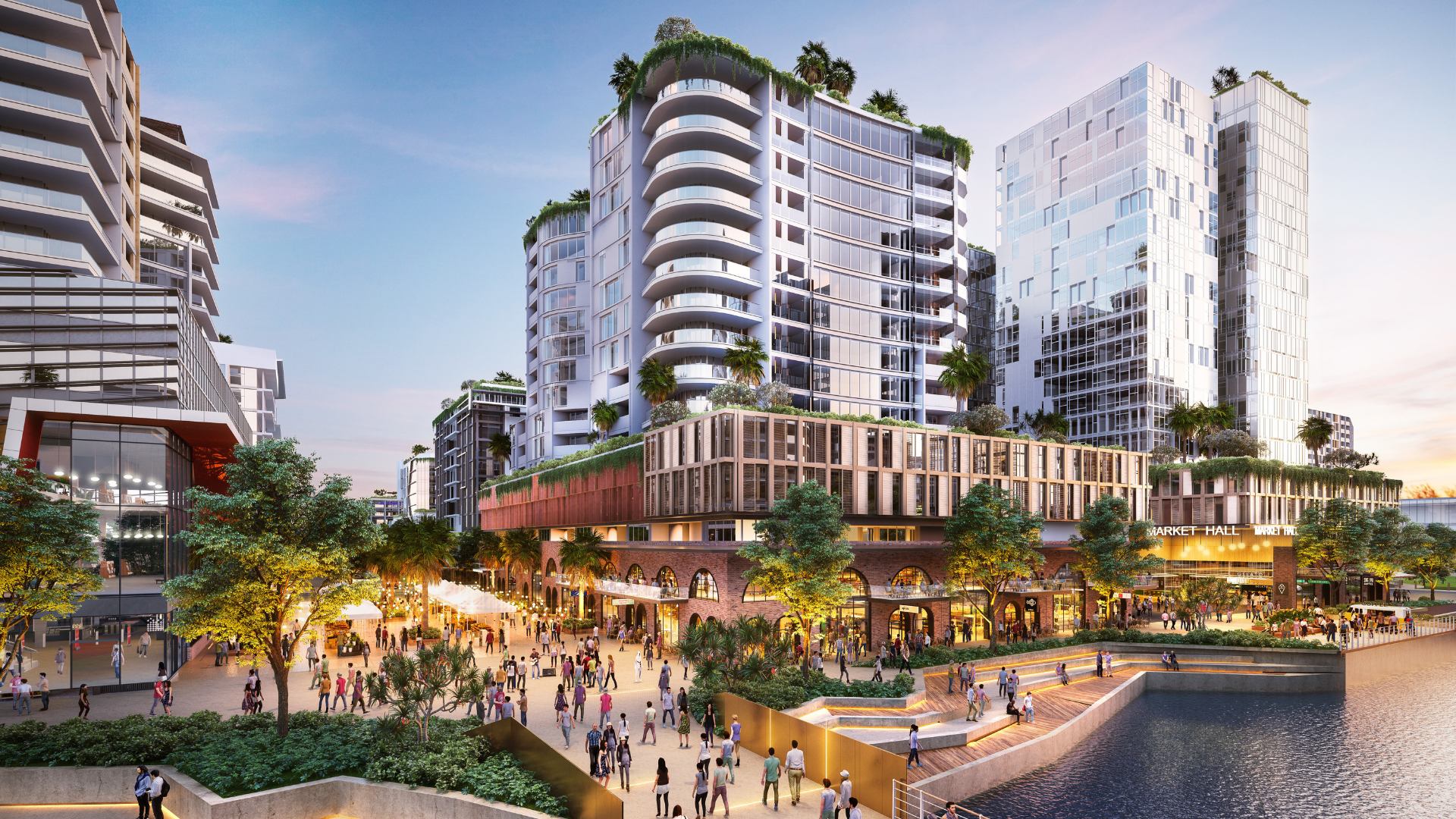
The Brisbane 2032 Olympic and Paralympic Games are set to deliver a $7.1 billion infrastructure rollout across South East Queensland, with the Sunshine Coast identified as carrying the highest infrastructure investment per capita of Australia’s 20 largest cities.
But here’s the insight most commentators miss: the real Olympic impact for the Sunshine Coast won’t just be infrastructure. It will be global exposure. When athletes, coaches, tourists, and media from around the world discover this region in 2032, many will want to return, invest, or put down roots.
Read more on Olympic Games positive impact on property prices and rental yields here. Once in a generation opportunity …
The investors who act before that spotlight lands will be the ones who look back very satisfied.
The New Planning Scheme: Why Zoning Will Define the Next Wave of Winners
This is the most underappreciated factor in the current Sunshine Coast investment landscape. The Sunshine Coast Council has publicly acknowledged that its 2014 planning scheme is outdated. A newly drafted scheme was presented in 2025, with formal adoption expected from 2026 onward.
Once adopted, this framework will fundamentally reshape how the Sunshine Coast grows over the next two decades. The proposed scheme outlines seven key strategic directions:
- Primary Growth Areas — Regional activity centres, urban living zones, and new communities, supported by a rapid transit corridor between Maroochydore and Caloundra, a new rail line from Beerwah to Maroochydore, and upgrades to the North Coast rail line.
- Urban Consolidation — Urban renewal in Maroochydore, Mooloolaba, Kawana, Caloundra, and Sippy Downs.
- Urban Expansion — New communities in Palmview, Caloundra South, and Beerwah East.
- Low Density Housing — Hinterland and suburban neighbourhoods to remain predominantly low density.
- Growth Limitations — Areas where development will be deliberately restricted.
The critical investor takeaway: supply won’t arrive evenly across the Sunshine Coast. This scheme is designed to channel density into specific corridors and centres. Choosing the wrong suburb in the wrong zone is the difference between exceptional growth and a mediocre outcome.
A Framework for Smart Investment Decision-Making
Given all of the above, here’s an actionable framework for anyone considering a Sunshine Coast investment:
- Step 1 — Follow the planning direction. Council planning will ultimately determine where those 70,000 additional dwellings get built. Ask: where is council encouraging growth, what dwelling types will be favoured, and where will infrastructure support future development?
- Step 2 — Understand supply dynamics. High-intensity supply zones like Aura can scale rapidly — standing out requires superior positioning. Constrained pockets are where genuine scarcity drives long-term value.
- Step 3 — Understand the demand engine. Look for the combination of employment hubs, transport nodes, infrastructure investment, and lifestyle appeal working together.
- Step 4 — Do your environmental due diligence. Flood risk, coastal erosion, and bushfire overlays are real factors. Check council flood maps and what insurance will actually cost before you commit.
The Bottom Line
The Sunshine Coast is not experiencing a short-term boom. It is undergoing a long-term structural transition — from a lifestyle destination to a deeper, employment and infrastructure-driven regional economy.
But here’s the honest truth: performance won’t be uniform. The investors who do well will be the ones who understand planning scheme implications, supply pipelines, infrastructure sequencing, and risk overlays at a granular level — not just headline data.
Don’t trust any buyer’s agent who simply presents data without interpreting it. Make them show you the raw numbers and explain what they mean. If they can’t do that, they’re not giving you the full picture.
The clock is ticking. With listings at five-year lows, vacancy at critical levels, and a new planning scheme about to reshape the entire growth landscape — the investors who wait for more certainty are the ones who will miss the window.
Want Help Navigating the Sunshine Coast Market?
This is exactly what we do at properT network.
We don’t just talk data — we interpret it. We source properties that genuinely fit your goals, your budget, your structure (whether that’s personal name, SMSF, or trust), and your risk profile. Then we challenge you on them — because an informed investment decision is always better than an emotional one.
Give us a call or book a free discovery chat today.
📱 0413 108 125 | 🌐 www.propertnetwork.com.au
“Creating Positive Wealth Outcomes through Educated, Strategic Property Investment.”
— Stephen Lazar | properT network
Disclaimer: This article is intended for general informational purposes only and does not constitute financial or investment advice. Always seek independent advice tailored to your personal circumstances before making any investment decision.
- Budget 2026-27 Negative Gearing explained
- Where to Invest in Queensland
- Why I would not invest in a Co-Living Property … and or why I would
- Rental Guarantees and Co-Living Property Investment
- The Rise of High-Yield Investment Property Strategies
- Autumn 2026 Property Market Insights and Growth Hotspots
- Melbourne Apartment Market Warning: Negative Growth and Oversupply investor risks
- Why PROPERTY INVESTING matters more now than ever for your own Financial Futures
More on Sunshine Coast and Across the properT network
Our latest builder and developer stock lists (July–October 2026) include 11 new listings on the Sunshine Coast, from $899k to $1.27m with a median of $1.08m.
- Sunshine Coast property investment: suburbs, new stock, prices and rents
- Maroochydore
- Compare all Queensland councils on the LGA matrix
- Strategy before property (properT network)
- Sunshine Coast investment property (properT network)
- Why infrastructure drives capital growth (properT network)
- Off the plan property Australia wide (properT network)
General information only, current at the date of publication. Market conditions change; please speak with us before acting on any figures in this article.
Strategy Before Property
Is Sunshine Coast Right for Your Strategy?
Share your budget, whether you want cash flow or growth, and your time frame, and Stephen Lazar will build a shortlist of locations and projects that fit.
One Network. Nationwide Reach.
Part Of The properT network Family
Investment Property Queensland is one specialist site within the properT network group — the same independent advisory approach, applied across states and property types.